Growing a marketplace that connects home chefs with customers

B2C Marketplace
Product Designer
1 PM, 2 Designers, 6 Engineers
2022
Growing a marketplace that connects home chefs with customers main visual
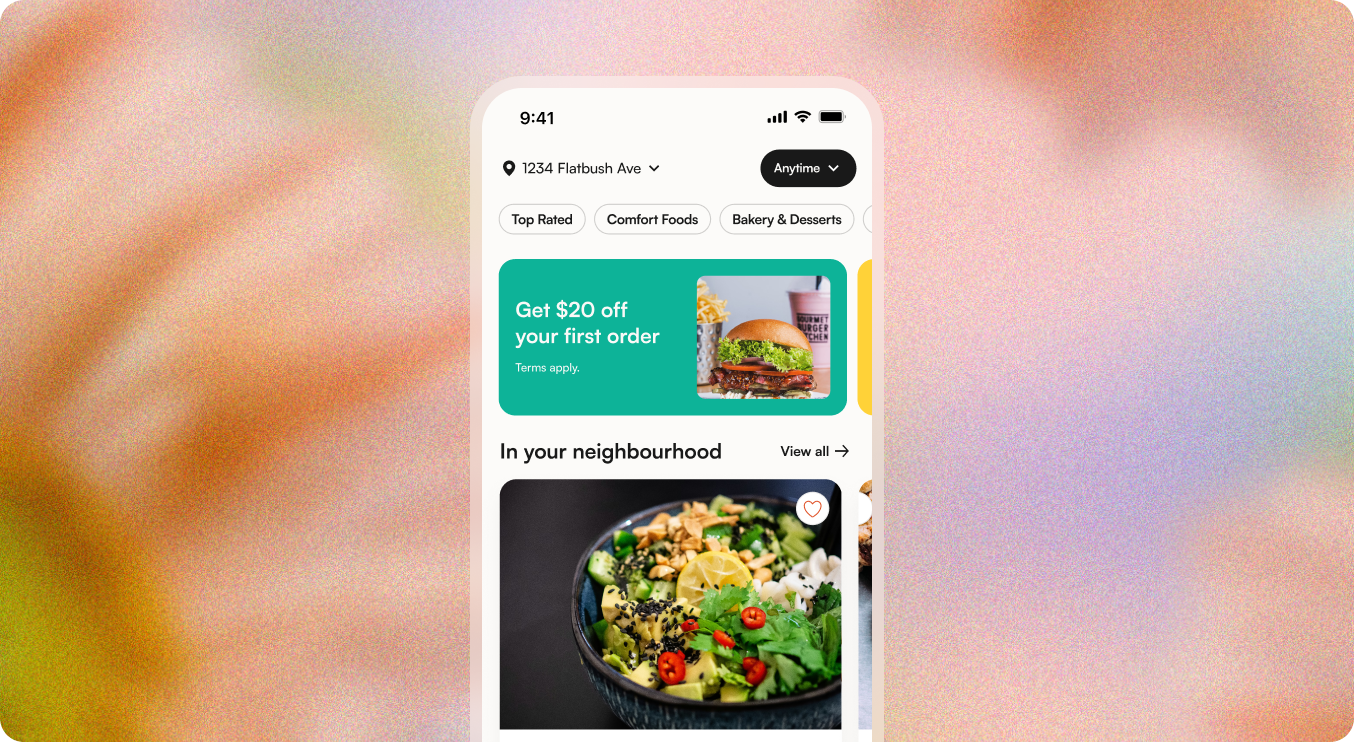
1234 Flatbush Ave
Anytime
Top RatedComfort FoodsBakery & DessertsFamily StyleHalalHealthyKoreanSouth AsianItalianMiddle Eastern

Get $20 off your first order

Terms apply

Food Safety is our priority

Learn more about our policy

In your neighbourhood

Healthy Bowl

By Annie30 - 60 mins4.8(45)
VeganGluten Free

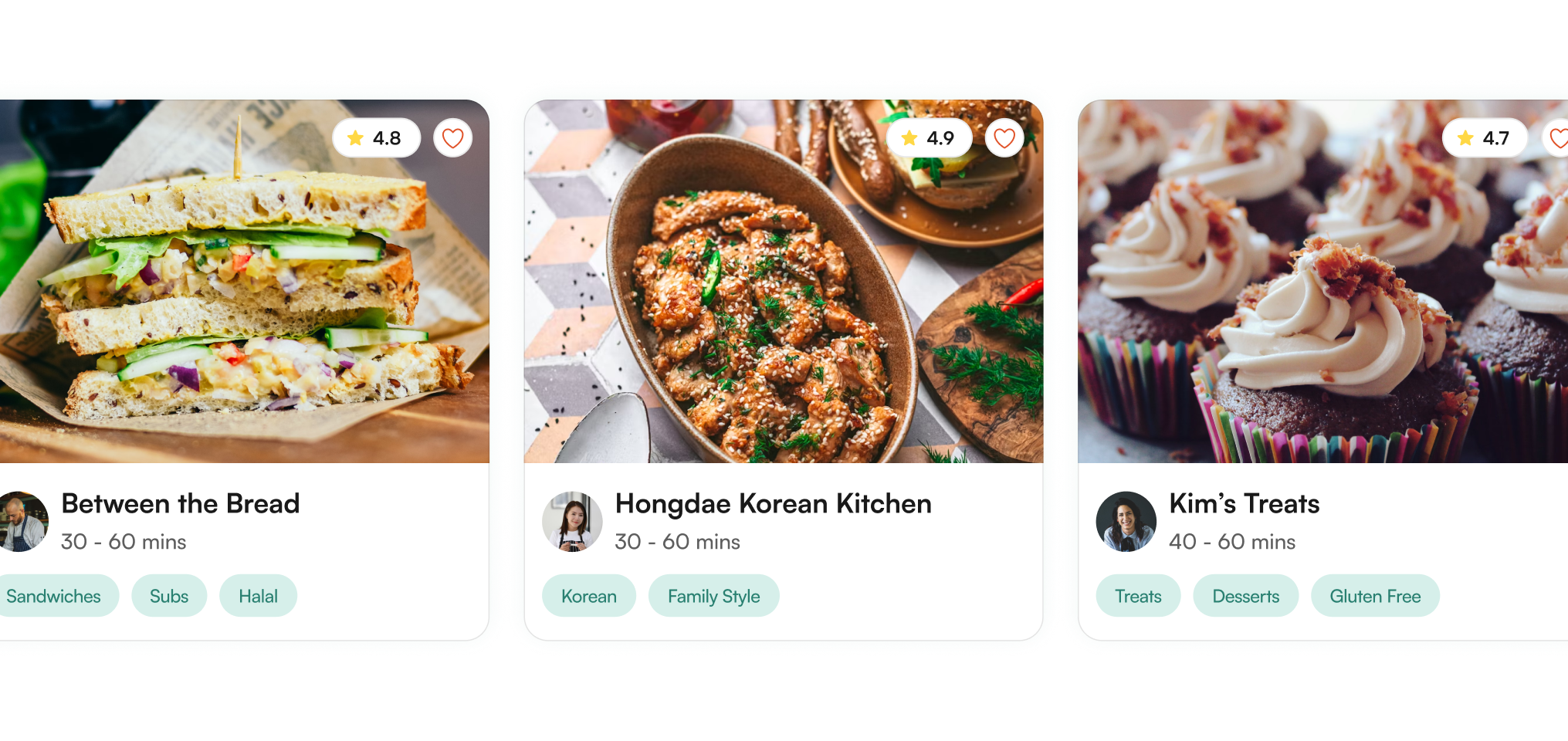
Kim’s Treats

By Kim M.20 - 40 mins4.7(24)
DessertsTreatsGluten Free

Cozy Curry

By Priya30 - 60 mins4.7(34)
South AsianFamily Style

Popular this week

Korean Sticky Chicken

Hongdae Korean Kitchen

By Jiyun4.7(35)

Lemon Herb Chicken Wrap

Garden Spoon

By Nora4.9(45)

Rustic Mushroom Pasta

Pasta Nook

By Luca4.9(39)

Vegan Tiramisu

Sugar Nest

By Ash4.9(41)

Open now

Between the Bread

By John30 - 60 mins4.9(45)
SandwichesSubsHalal

Sunny Harvest

By Maya25 - 45 mins4.8(43)
HealthyBowls

Olive Table

By Petros30 - 60 mins4.8(28)
MediterraneanFamily Style

Overview

[01]CONTEXT

Cookin is a marketplace for home-cooked meals, connecting customers with local cooks offering dishes rooted in culture, community, and personal stories. As an early-stage startup, Cookin came to Playground Inc. to bring the product from idea to launch across iOS and Android.

[02]NEED

Most food delivery platforms were built around restaurants, leaving a gap for home cooks, culinary creators, and small food businesses. Cookin saw an opportunity to create a more personal food marketplace, one that gave customers access to authentic home-cooked meals while helping cooks share their food, culture, and love of cooking with a wider community, without needing to own or operate a restaurant.

[03]MY ROLE

I co-led product design with another designer, shaping the experience across both sides of the marketplace. I helped turn early user and business needs into clear product flows, define the foundation of the platform, and work closely with product, engineering, and the founders from research through launch.

[04]IMPACT

Cookin has since grown from its initial Toronto launch into a marketplace active across 9 Canadian provinces and 26 U.S. states. The platform has onboarded 2,000+ cooks, maintained a 4.8+ average app rating, and much of the current product still builds on the foundation I helped define.

Cookin case study placeholder visual — update later
[05]KEY INSIGHTS

Understanding how home cooks work

To design an experience that could support home cooks, I needed to understand how they planned, prepared, and sold food in real life.

Through conversations with cooks in Toronto and New York, we learned that their needs were different from restaurants. They needed flexibility, control, and support for the parts of the business that happened outside the kitchen.

Flexible schedules were essential

Home cooks were often balancing cooking with other jobs, family responsibilities, and changing weekly routines. They needed the ability to control when they were available, rather than being locked into fixed restaurant-style hours.

Menus changed based on time and ingredients

Unlike restaurants, many cooks did not operate from a static menu. Their dishes could change depending on what ingredients they had, how much time they had to prepare, or what they felt inspired to cook that day.

Building connection through food

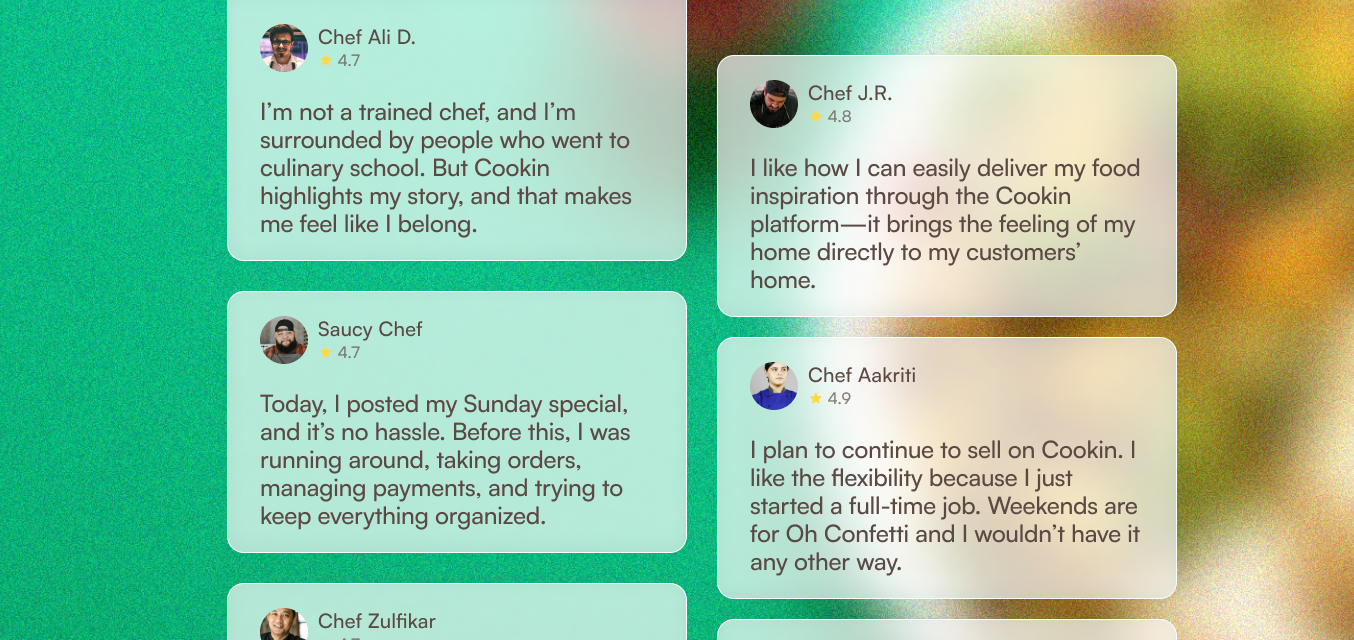
For many cooks, joining Cookin was not just about selling meals. They wanted to share their culture, personal stories, and love of cooking with customers who would appreciate it.

Delivery and packaging felt overwhelming

Many cooks were excited to share their food, but felt less confident about the logistics beyond cooking. Packaging, timing, and delivery added a layer of complexity they were not used to managing.

Cookin case study placeholder visual — update later
[06]SOLUTION

Shaping the foundation of the Cookin experience

The core experience needed to feel simple enough for first-time sellers, but flexible enough to support how home cooks actually worked. I focused on designing flows that helped cooks manage orders, update their menus, share their stories, and feel supported through the process of getting meals to customers.

Each solution was shaped around a key tension: making the experience feel professional and trustworthy without forcing home cooks into a restaurant-style model.

Making order management feel manageable

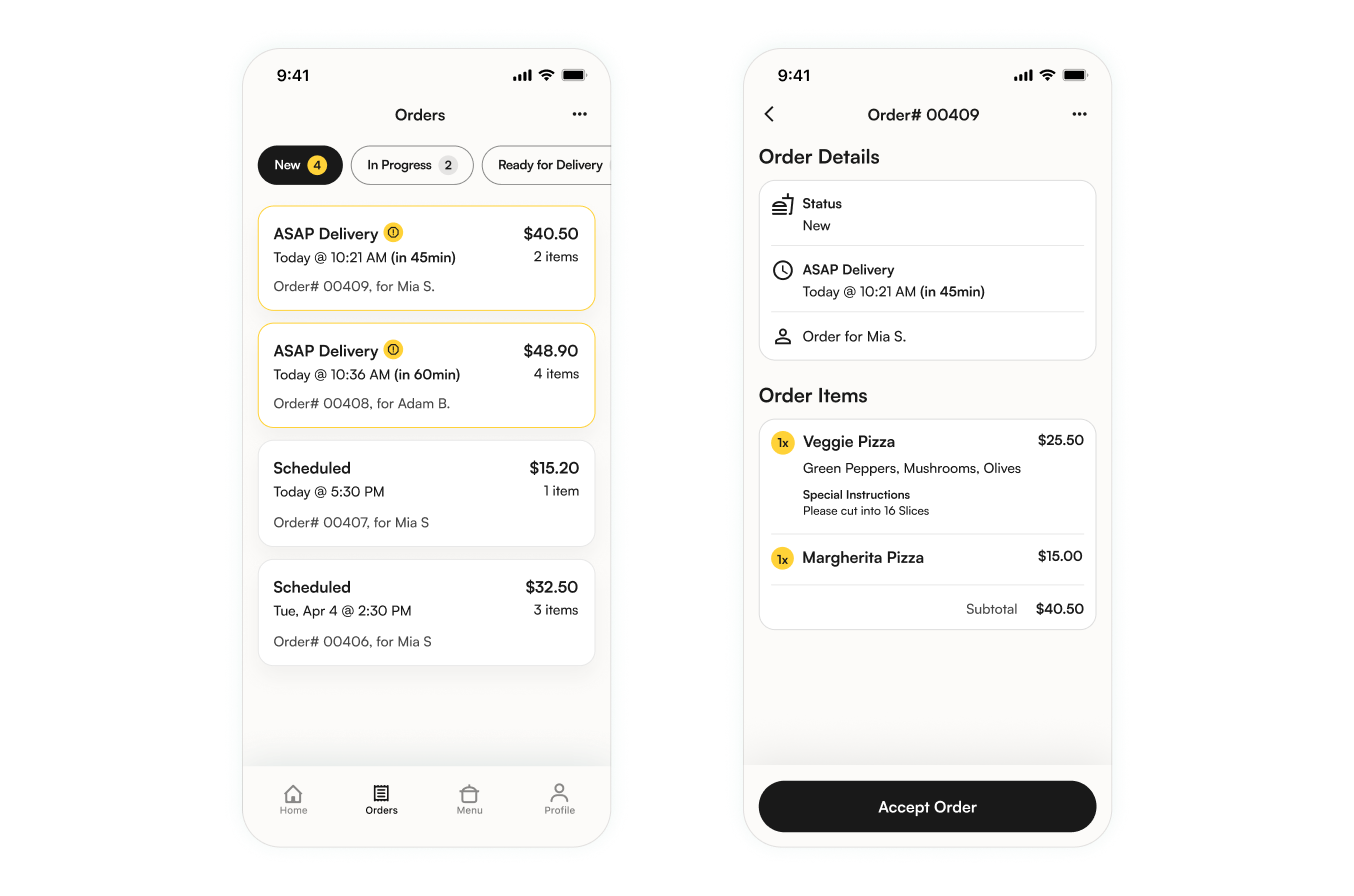
For many cooks, receiving and fulfilling orders through an app was a new experience. The flow needed to help them stay on top of what was urgent without overwhelming them with every detail upfront.

I focused on surfacing the right information at the right time, using progressive disclosure to keep each step clear. Cooks could quickly review incoming orders, understand what needed action, and access secondary controls when plans changed, like pausing new orders, adjusting delivery times, delaying, or cancelling.

Cookin case study placeholder visual — update later

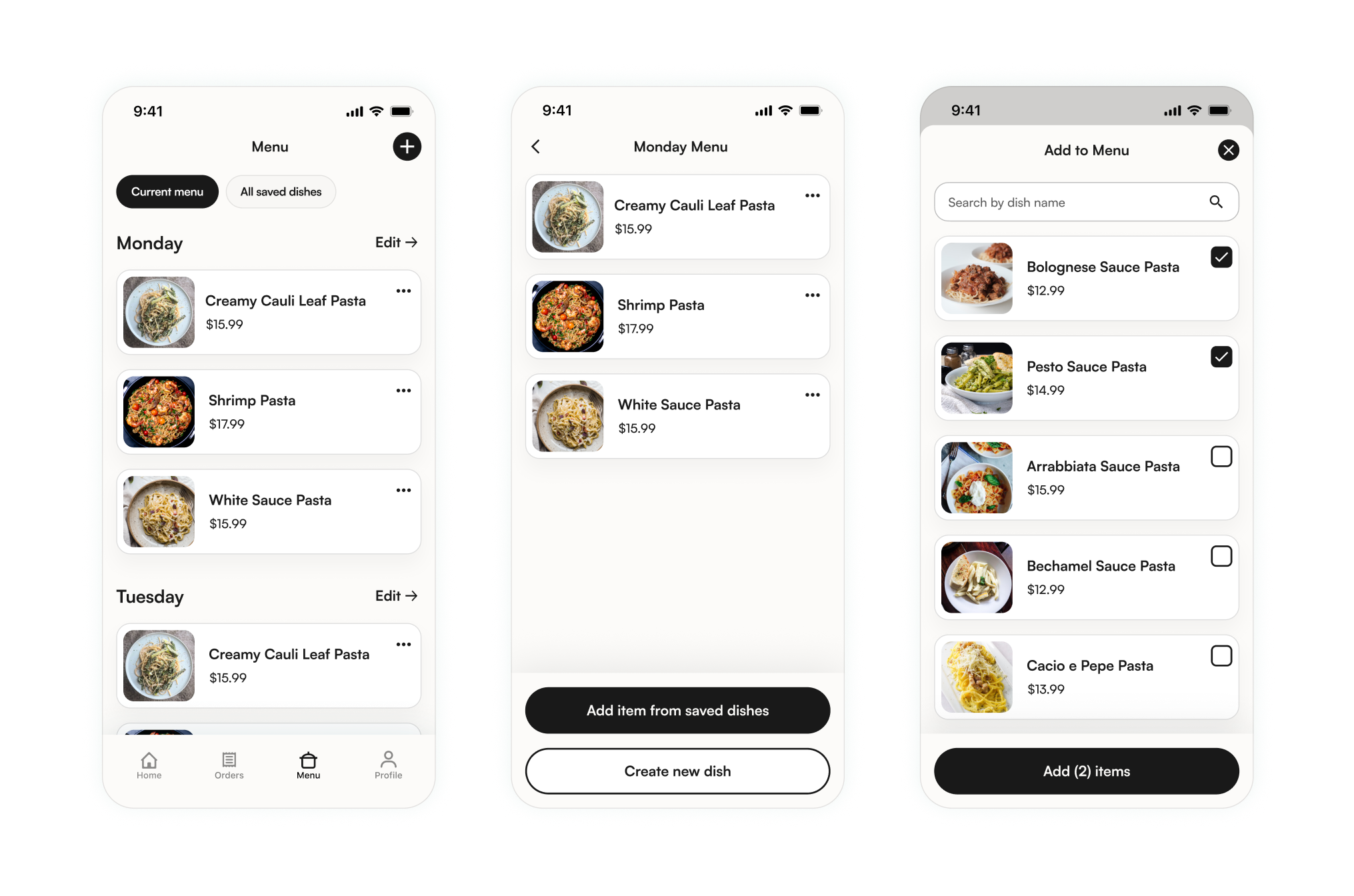
Supporting day-to-day menu changes

I focused on making menu management feel low-effort, so cooks could update what they were offering without rebuilding their menu from scratch.

Cooks could adjust dishes by day, reuse meals they had offered before, and keep their storefront aligned with what they were actually able to cook. This gave them more control while avoiding the rigidity of a traditional restaurant-style menu.

Cookin case study placeholder visual — update later

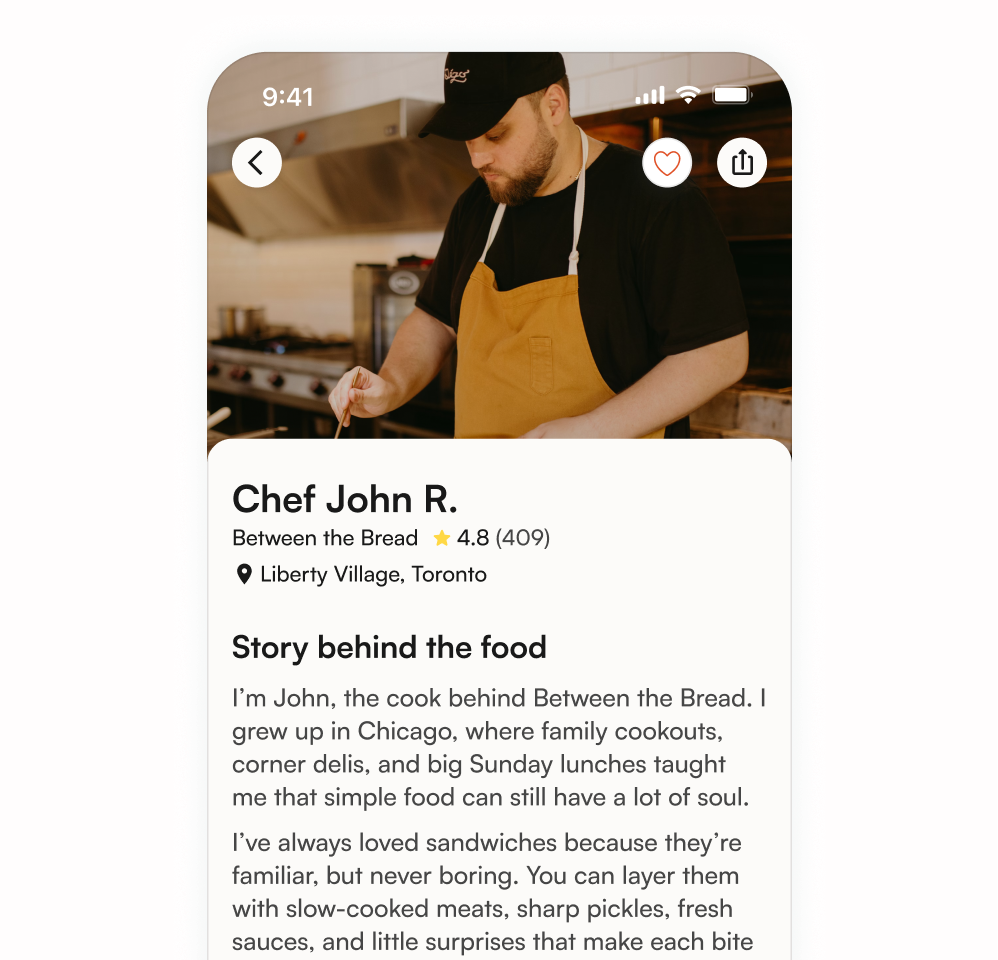
Bringing the cook’s story into the experience

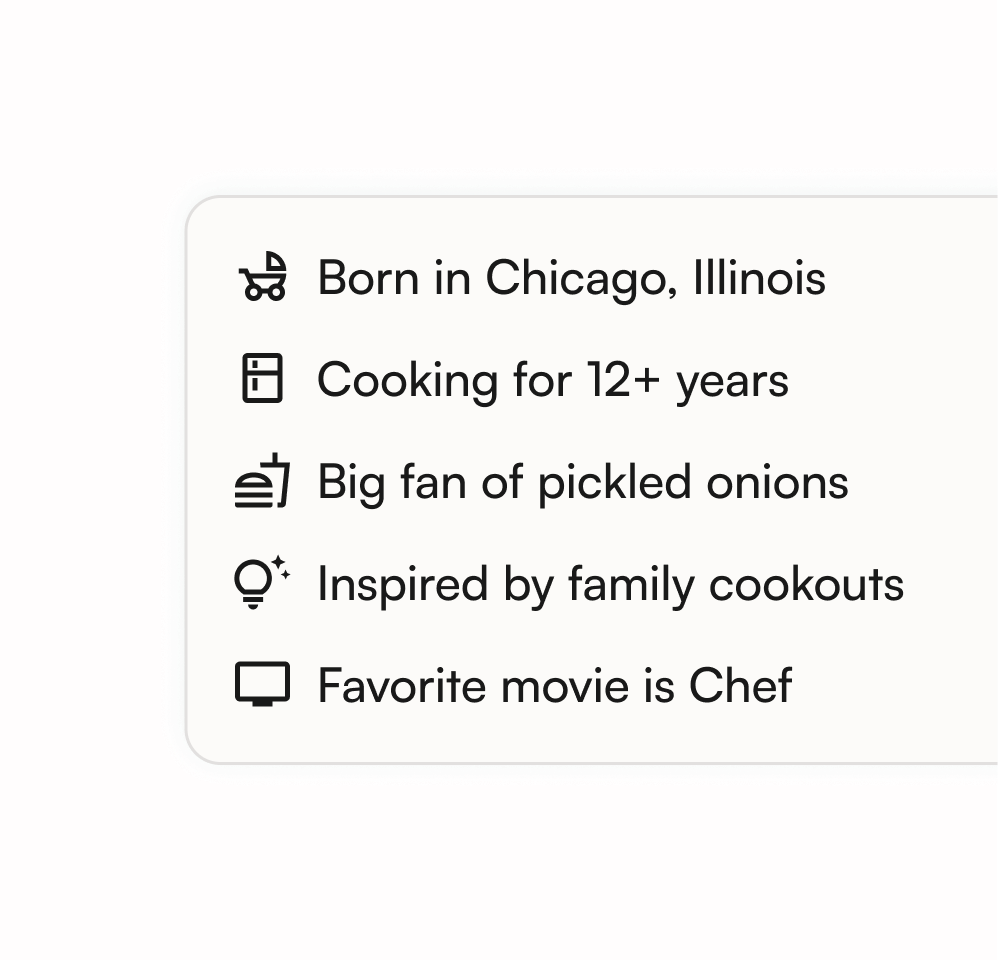
For many cooks, food was a way to share their culture, personality, and story. I focused on making that more visible, so customers could feel a stronger connection before placing an order.

Cook profiles gave customers a deeper look at the person behind the food, while larger storefront and dish cards gave photography more space to carry the story. Instead of optimizing only for how many merchants appeared on screen, the experience gave each cook more room to express what made their food personal.

Cookin case study placeholder visual — update later

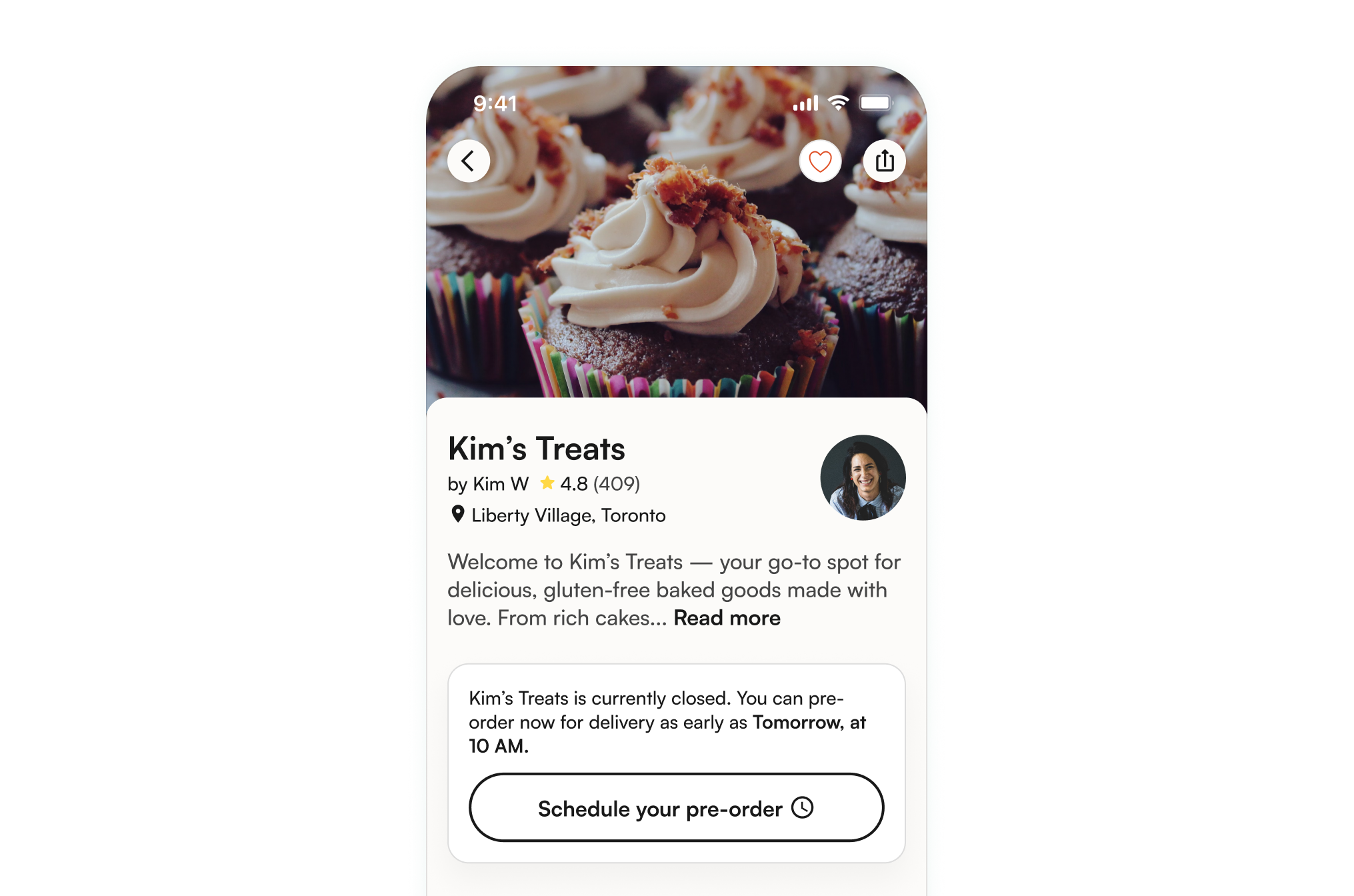
Rethinking pre-orders as a revenue opportunity

Later in the project, conversations with cooks being recruited as early adopters surfaced a new opportunity. Since many cooks would only be open on certain days, they wanted customers to be able to place orders even when their storefront was closed.

Instead of limiting pre-orders to active business hours, Cookin could let customers order ahead for a cook’s next available day. This gave part-time cooks more chances to be discovered, helped them start open days with orders already lined up, and created another path to revenue without forcing them to operate like a full-time restaurant.

Cookin case study placeholder visual — update later
[07]REFLECTIONS & LEARNINGS

Two-sided marketplace thinking

One of the most rewarding parts of this project was switching between the customer and cook perspectives. Each side had different needs, motivations, and expectations, and the product only worked if both experiences supported each other.

Real workflows over familiar patterns

It would have been easy to rely on familiar patterns from food delivery apps, but many of those patterns were built around restaurants. The strongest solutions came from designing around how home cooks actually planned, prepared, and sold food.

Fast founder collaboration

Working closely with the founders gave me a clearer understanding of the business, the story they wanted to tell, and the value they wanted Cookin to create. Their involvement helped us make decisions quickly while keeping user needs and business goals connected.

Product foundations matter

Cookin reminded me why I enjoy 0→1 product work. Early design decisions can shape how a product grows, so the goal was not just to launch an MVP, but to create a foundation that could support the marketplace as it expanded.